- Product
- AI-powered self-development app for belief tracking
- Goal
- Define product shape for a category without precedent
- My role
- Solo product designer: product framing, UX, AI behavior design
- Team
- Me + founder + data scientist
- Constraints
- No category to reference; high cognitive load = high abandonment; evolving vision throughout
- Shipped
- MVP with progressive onboarding, belief evolution views, LLM interaction patterns
- Result
- Launched MVP with clearer framing and interaction model
→ Context
Users track beliefs over time and use AI-guided sessions to notice patterns and contradictions.
The project began with an ambitious but fluid idea, moving between several directions early on. A debating platform. A thinking tool. Something closer to guided self-reflection.
This made it difficult to reason about scope, sequencing, and what progress meant for users. The issue was lack of a product shape.
My focus was helping translate an evolving vision into something that could be explored, tested, and shipped incrementally, without locking the product into an unvalidated direction.

→ The underlying problem
When testing an early proof of concept, we found that deep thinking products demand significant cognitive effort. The audience is niche. The territory sits close to therapy, raising expectations around tone, responsibility, and trust.
We expected drop-off because the product requires cognitive effort before value compounds.
There was no existing category to reference and no established interaction patterns to borrow. The challenge was deciding what to build first, in what order, and why.
→ Key decisions
1. Product framing
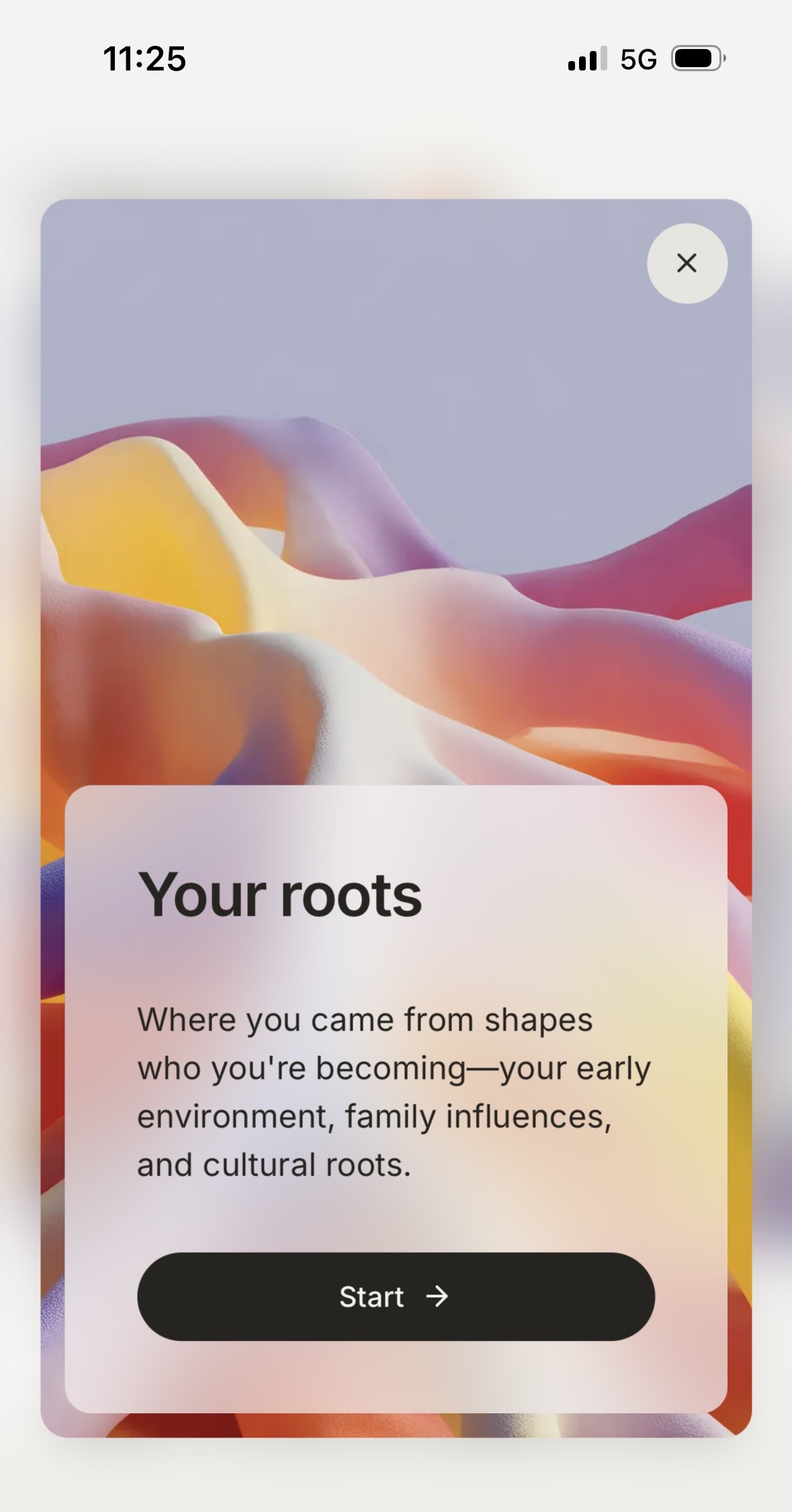
To me, one of the strongest insights from the early explorations was that we should move away from frame it as a tool for deep thinking and toward something closer to learning how to be effective at life.
Rather than asking users to engage in heavy philosophical work upfront, the product needed to help them uncover relevant territory, recognize patterns, and build confidence in the system.
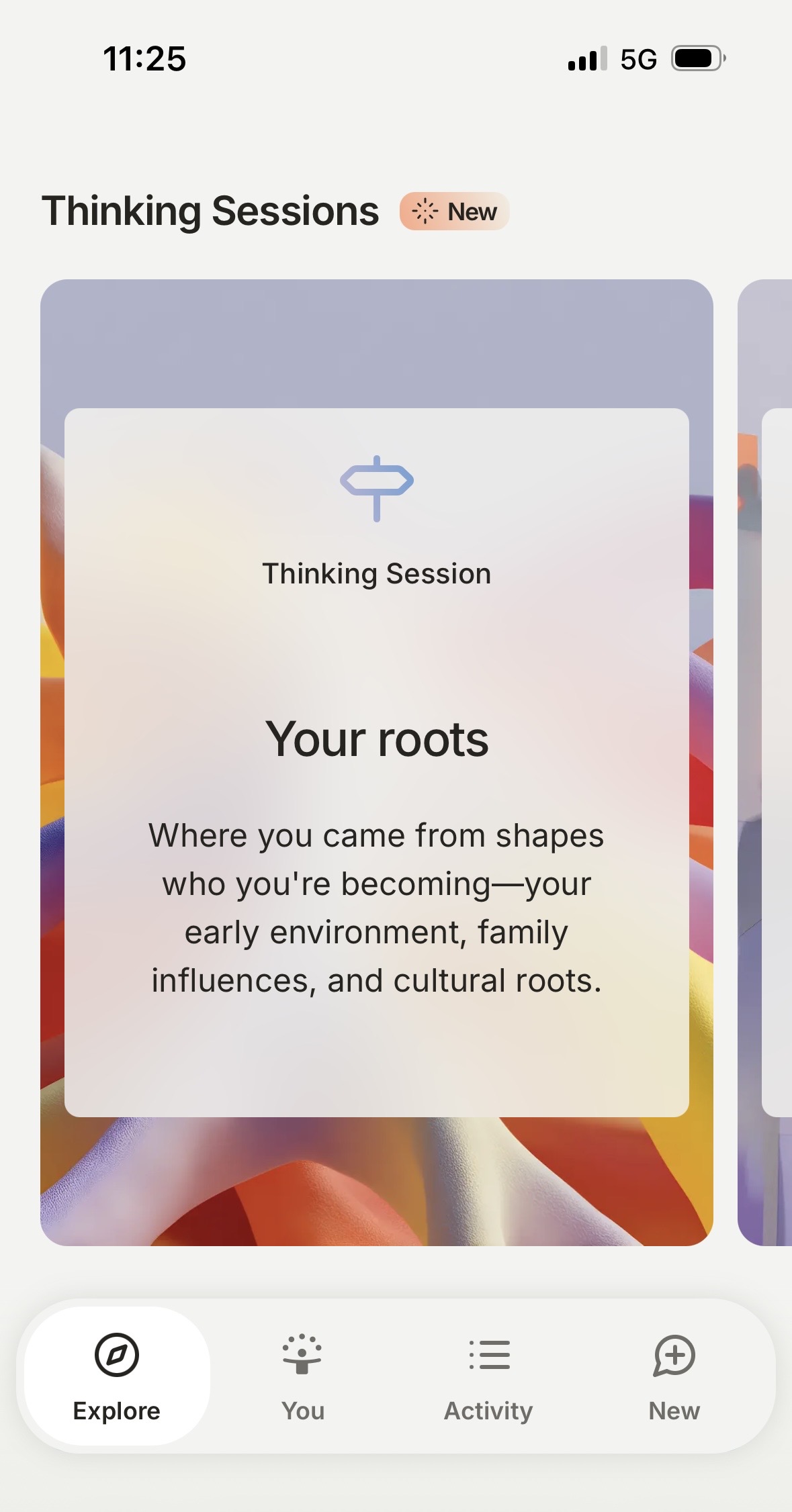
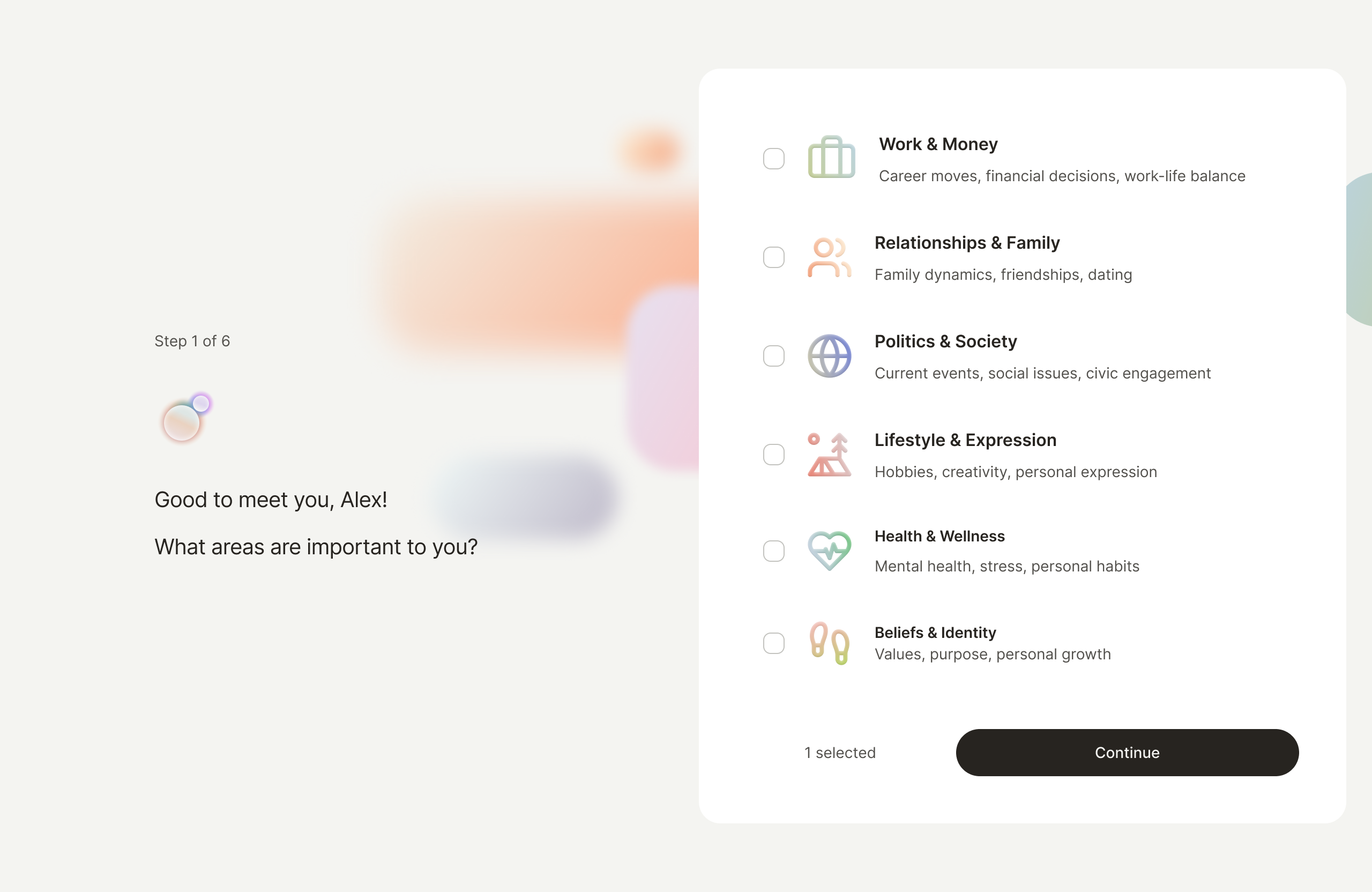
The product was structured around predefined life areas that users could explore freely or work through as structured programmes. This created a sense of progression without forcing depth upfront and became a reference point for later design decisions.
2. MVP Scope
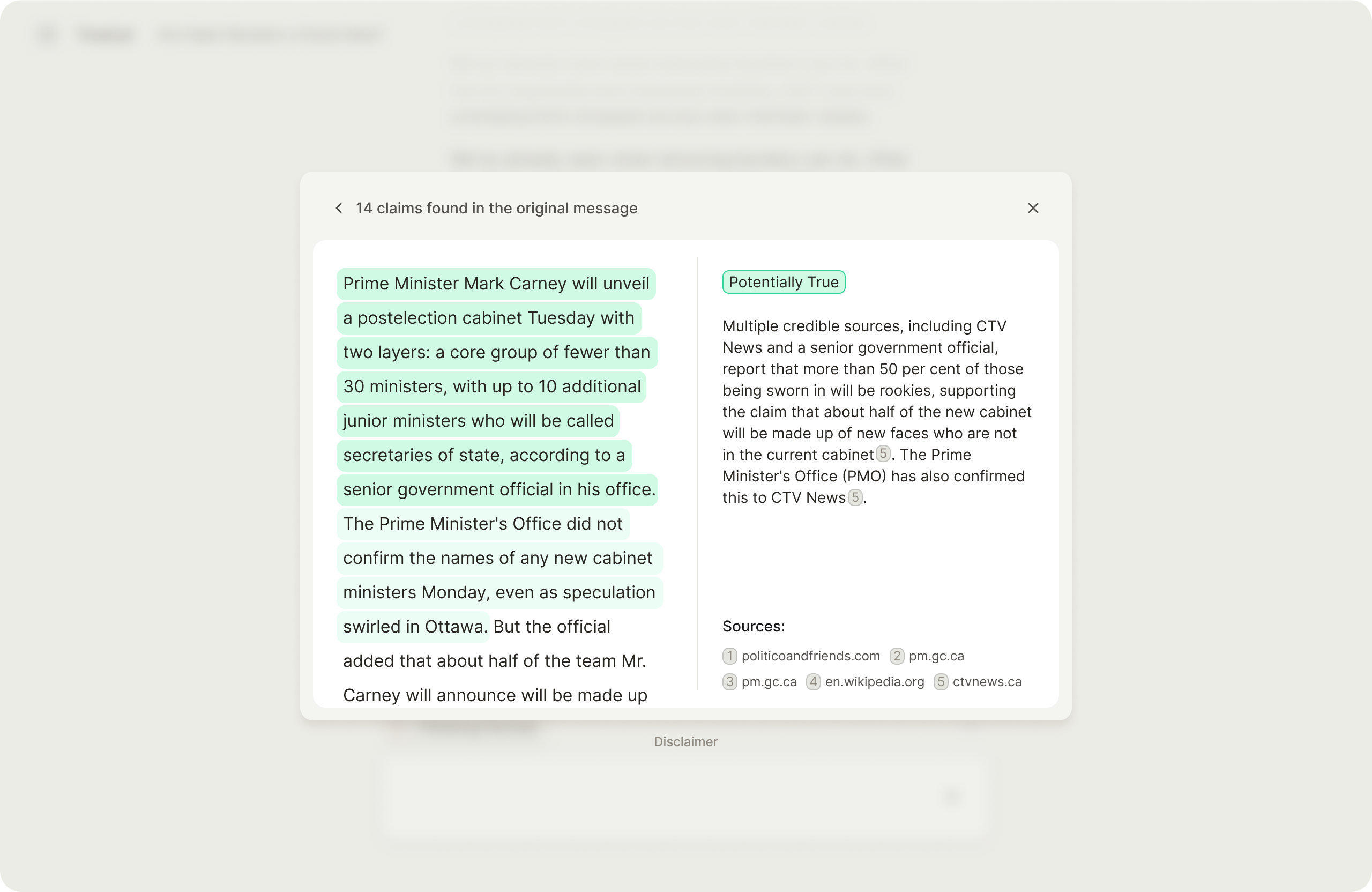
MVP scope was a constant discussion.
My contribution was helping stress-test scope decisions from a user effort and interaction cost perspective, particularly in a product where value compounds over time.
3. Showing value early
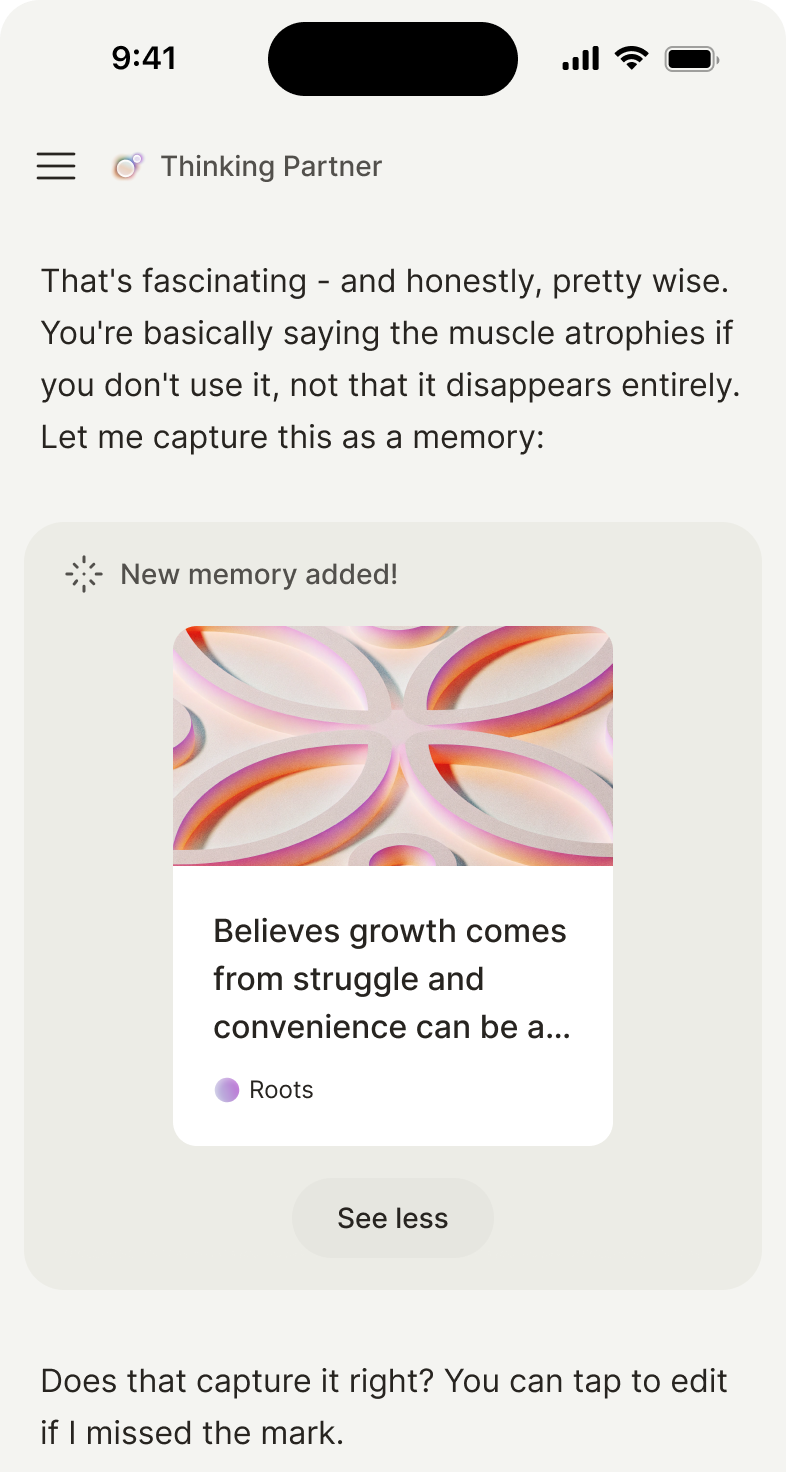
The product’s value depends on accumulated memory, but asking for deep reflection upfront creates friction most users won’t cross.
I focused on progressive complexity and showing value early. Early interactions are low-friction and produce meaningful output quickly. As trust builds, the system introduces more nuanced capabilities.
The interface demonstrates intelligence before asking for commitment.

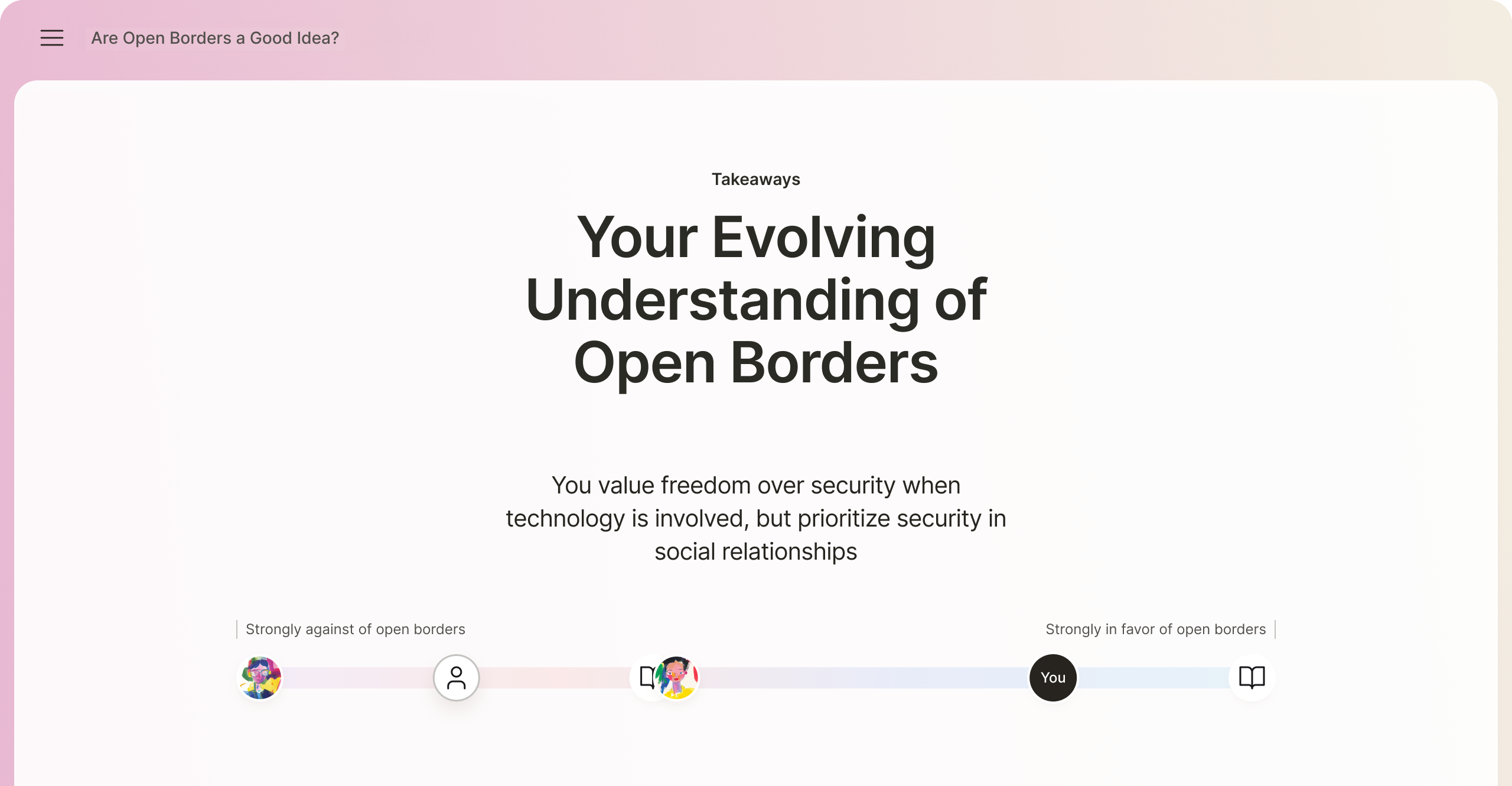
4. Making memory legible
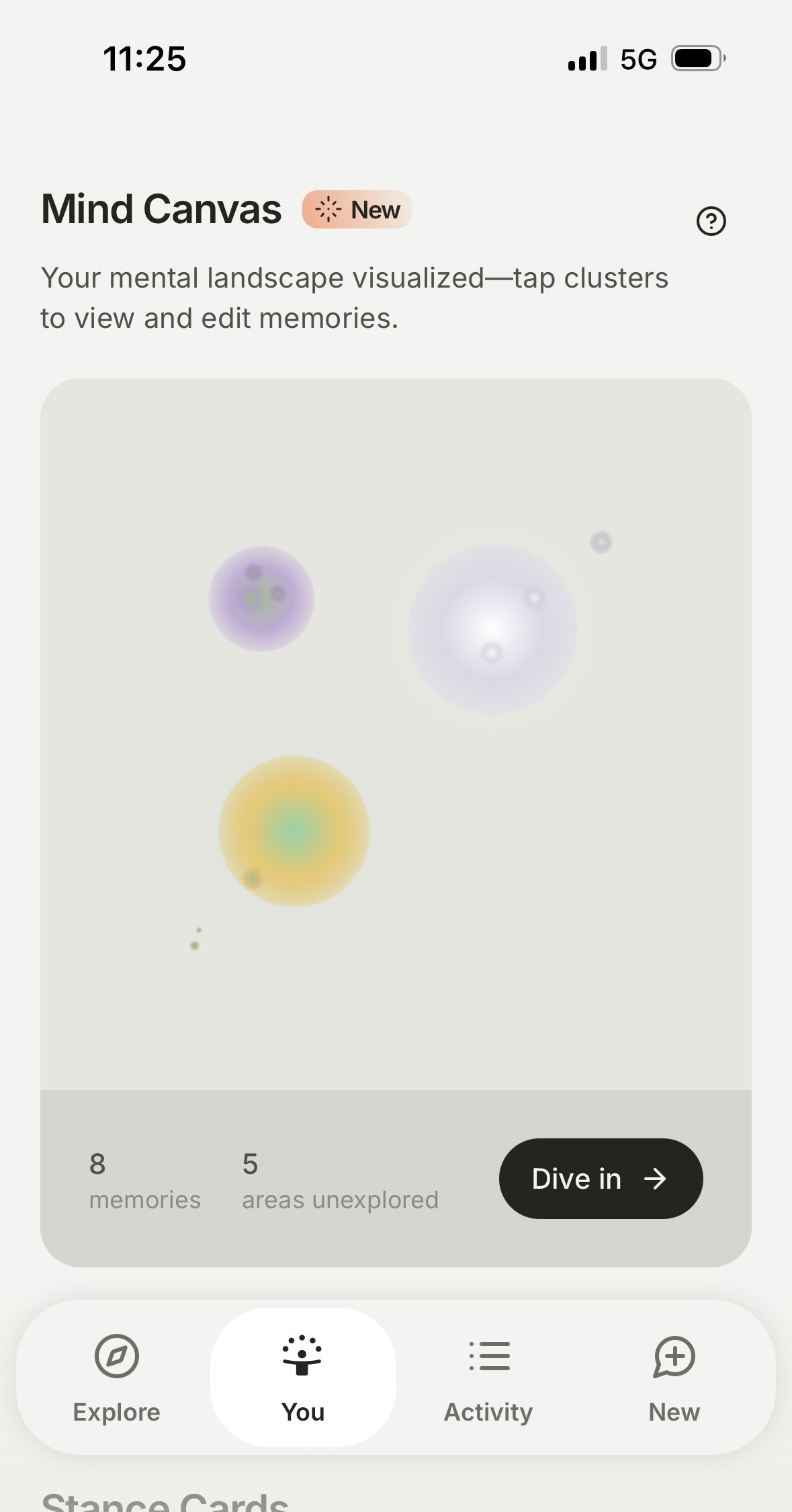
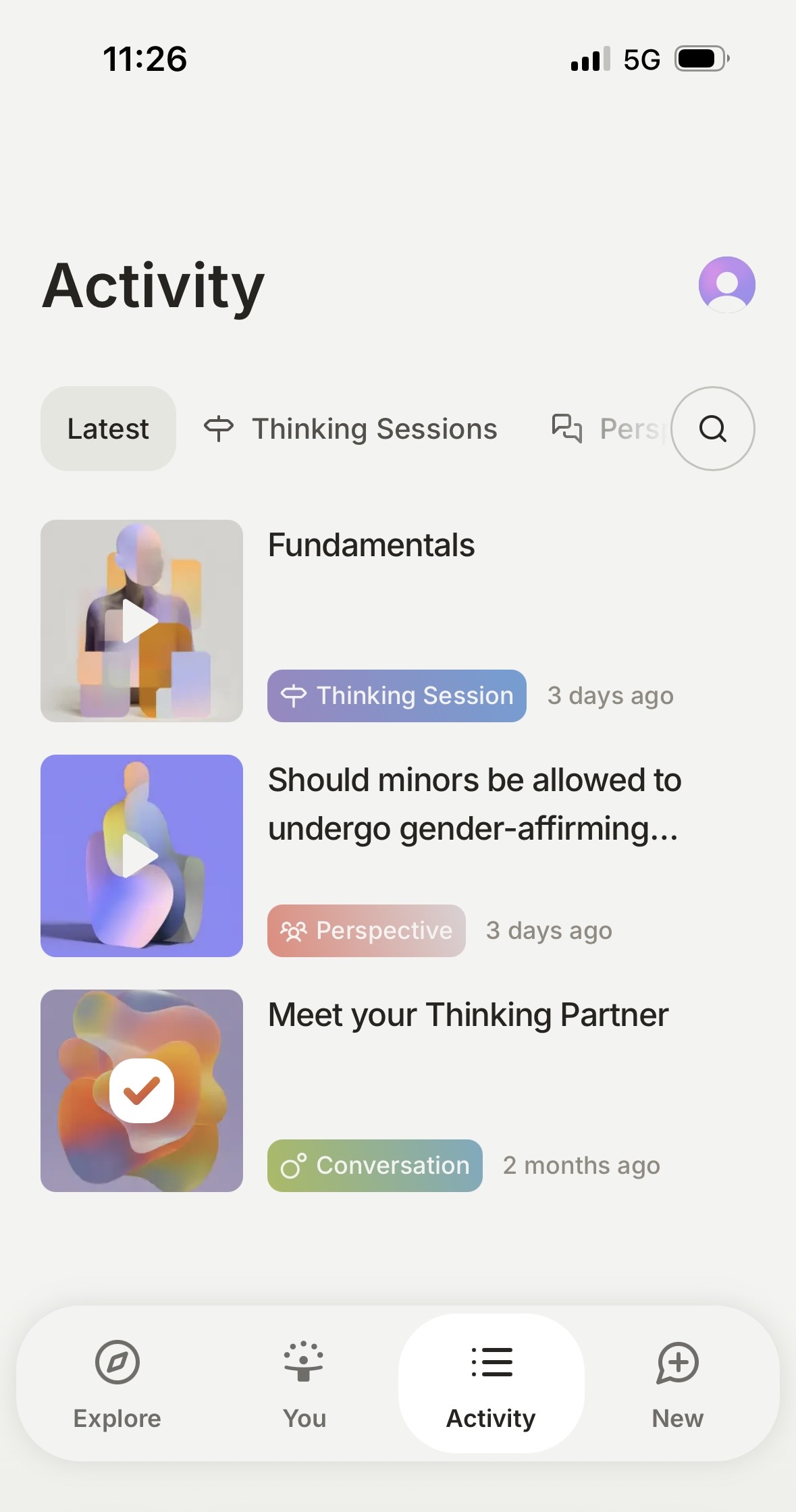
Memory emerged as a central differentiator. Not just storing inputs, but tracking how beliefs evolve over time.
My focus was on making this value visible in the interface.
Rather than presenting memory as a list of entries, the design surfaces development over time. Users can see how their thinking changes, not just what they said in the past.
5. Treating LLM behavior as a design surface
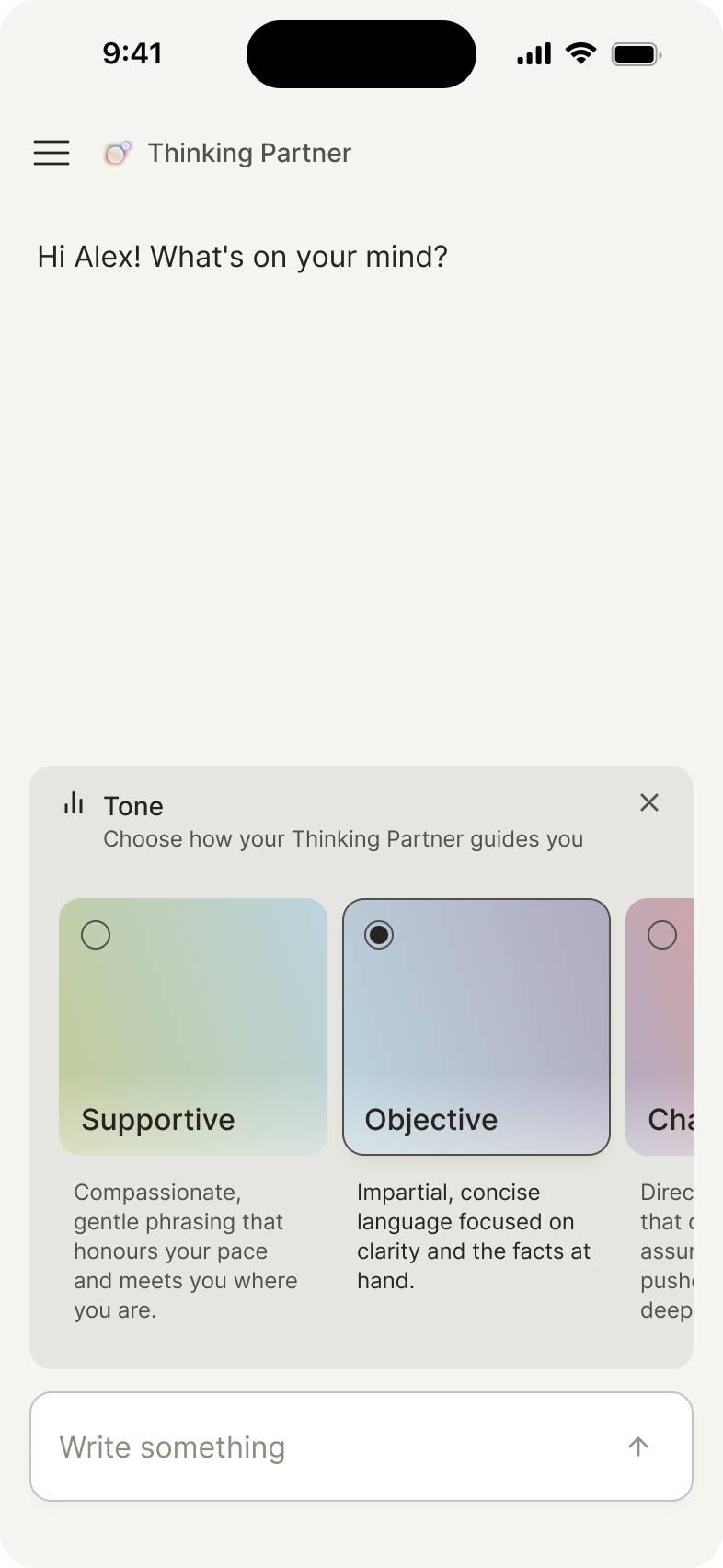
Much of the design work extended beyond screens. I treated LLM behavior as a design material, shaping specific behaviors:
- How it surfaces contradictions without judgment
- How it references past sessions without sounding like surveillance
- How it stays on topic without feeling rigid
This required close collaboration with the data scientist, working through edge cases and failure modes alongside interaction design.
→ Outcome
The product launched as an MVP within the defined scope.
It established a position distinct from both therapy products and productivity tools, and set initial interaction patterns and visual metaphors for a category without established precedent, while leaving room for future expansion.
Product name changed for confidentiality